Wednesday, July 14, 2010

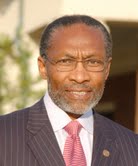
Ms. Patricia J. Fletcher of the Prince George's County Board of Education Talks About The Importance Of Parental Engagement

An exclusive interview with Ms. Patricia J. Fletcher of the Prince George's County Board Education can heard on The Journey Begins Internet Radio for the engaged parent and dedicated educator. Ms. Fletcher will appear on the Educational Gateway, a weekly broadcast hosted by Michael Robinson. The show will air on July 21, 2o1o. To join the conversation, follow the link below.


BIO

A 30-year resident of Prince George's County, Patricia J. Fletcher was elected on November 7, 2006, to a four-year term on the Prince George's County Board of Education to represent the residents of School Board District 3. She has two adult children who were educated in the Prince George's County Public Schools; one is a teacher in the public school system, and the other is a Cosmetology Instructor at a private school. Ms. Fletcher also has four grandchildren who are enrolled in the Prince George's County Public Schools.

A community activist for many years, Ms. Fletcher is President of the Kentland/Columbia Park Boy's and Girl's Club; Vice President of the G. James Gholson Middle School PTA; Past President of the Forestville High School and John Carroll Elementary School PTAs; Past-President of AFSCME Local 2095 and Village Green Mutual Homes, Inc.; Member of the Prince George's Multicultural Alliance; and serves on Youth and Political Committees.

Ms. Fletcher has worked for 26 years as a District of Columbia Mental Health Counselor and Forensic Psych Technician. She worked for 5 years as Staff Representative and Chief Negotiator for Arbitration, Mediation, and Grievances with the American Federation of State, County, and Municipal Employees - Council 67.

Ms. Fletcher currently serves as the Retired and Senior Volunteer Program (RSVP) Coordinator with the Prince George's County Department of Family Services (LTGF).

Saturday, June 26, 2010

Prince George's County Administrators Focus on Student Achievement


Administrators from Prince George’s County Public Schools will gather together June 28-30, 2010 at Northwestern High School for the annual Summer Leadership Conference. Focusing on the message of this year’s conference – Framing the Future: Committing to Results – principals and assistant principals will attend workshops on instructional strategies, interventions, and system initiatives.

The three-day conference will open on June 28 with greetings from the Board of Education Chair Verjeana M. Jacobs, Esq., and remarks from School Superintendent Dr. William R. Hite, Jr. who will unveil the school district’s five new goals for the upcoming school year. Charlotte Danielson will serve as this year’s guest speaker.

Danielson is the creator of the Framework for Teaching model which PGCPS currently uses for its work with teacher effectiveness.

Monday, June 14, 2010

An Interview with Dr. Ernest McNealy, President of Stillman College


The Journey Begins, Internet Radio for the engaged parent and dedicated educator will air an exclusive interview with Dr. Ernest McNealy, President of Stillman College. Dr. McNealy sat down with Ms. Michel S. Davis-Robinson on the set of the iCollege Tour Series to discuss the role of small colleges and how they are remaining vital in the competitive world of postsecondary education.


Dr. Ernest McNealey, Stillman College’s fifth president, is an educational leader, artist, and advocate for the common good. Dr. McNealey’s academic appointments have been marked by increasing levels of responsibility. He began as an instructor of art at a four-year college and, prior to assuming the Stillman presidency, had advanced to a Deanship at a Carnegie I research institution.

Dr. McNealey has been at the forefront of educational initiatives, serving in key leadership roles. Among his professional activities has been the following: Member, APCURM Board of Directors (Presently); Member, NCAA D-II Presidents Council (Presently); Member, Board for the HBCU Capital Financing Program (2006 - 2009); Member, Southern Education Foundation HBCU Advisory Board (Presently); President, Association of Presbyterian Colleges and Universities (2003-2004); Treasurer, Association of Presbyterian Colleges and Universities (2004- 2005); Member, Educational Testing Service – HBCUs Advisory Board (2002 – Present); Chairman (Presently), Member of the Board, National Association for Equal Opportunity in Higher Education (2002-2008); Member, Honda Campus All-Star Challenge Program Advisory Committee (Presently); Member, Paul R. Jones Collection Advisory Board (Presently); Member of the Board, United Negro College Fund (2002-2004); Commissioner, Southern Association for Colleges and Schools (2001-2006); Executive Council, SACS/COC (2005 - 2006); Director, National Bank of Commerce, Tuscaloosa, Al. (1997-2005); Member, Board of Directors, Tuscaloosa Symphony Orchestra (1998-2003); Member, Governor’s Office of Employee Relations, SUNY Management Negotiating Team with the United University Professions Union (1995-97); and Executive Editor, The Journal of Undergraduate Research, The State University of New York at Stony Brook (1994-97). Presently, he is active in the areas of planning, assessment, and accreditation.

Dr. McNealey was also an award-winning artist, having garnered honors in juried exhibitions, including an award from Chicago’s Museum of Science and Industry. He has completed commissions from major corporations, including Anheuser-Busch and R.J. Reynolds, and rendered numerous designs for a variety of civic and social associations.

Dr. McNealey holds a Ph.D. from Ohio State University, a master’s from Indiana University, a Bachelor’s from Alabama State University, and a certificate on the Academic Presidency from Harvard University. He is a member and elder at Brown Memorial Presbyterian Church in Tuscaloosa, Alabama, a life member of Kappa Alpha Psi Fraternity, and a founding member of 100 Black Men of West Alabama.

Wednesday, June 2, 2010

An Exclusive Interview With Dr. Terrance E. Suarez, president of Mountain Empire Community College


Dr. Terrance E. Suarez will appear on The Journey Begins Internet Radio for the engaged parent and dedicated educator to discuss the issue of Remedial Education and some of the innovative approaches Mountain Empire Community College has taken to support the academic achievement of students enrolled in remedial education courses.


Dr. Terrance E. Suarez became president of Mountain Empire Community College on January 2, 2002.

Dr. Suarez has 37 years of experience in the Virginia Community College System, beginning as a founding faculty member at J. Sargeant Reynolds Community College where he taught chemistry. In 1979, Dr. Suarez moved to Wytheville Community College and served as Division Chair of Allied Health and Science Programs. Later he served as Dean of Instruction and Student Services. He also served as Acting President during the fall term of 1999.

Dr. Suarez holds a doctorate in chemistry from the University of Kansas and a bachelor’s degree from Florida Presbyterian College (now Eckerd College) in St. Petersburg, Florida.

Since moving to Big Stone Gap, Virginia and Mountain Empire Community College, he has been active in economic development efforts and civic groups in the region. In addition to serving on the Board of the Virginia Economic Bridge, he serves on the Board of Directors for the Wise County Chamber of Commerce, the Virginia Workforce Network, the Cove Ridge Center Foundation, Pro-Art, Lonesome Pine Arts & Crafts, the Southwest Virginia MTC, Wellmont Lonesome Pine Hospital, Southwest Virginia Workforce Investment Board and the National Accrediting Agency for Clinical Laboratory Science.

He is also active in the Kiwanis Club of Big Stone Gap, the Lee County Chamber of Commerce, the Virginia Coalfield Coalition, and many other local and regional organizations. Dr. Suarez was also presented the Distinguished Service Award from the Wytheville Kiwanis Club.

As president of Mountain Empire Community College, one of Dr. Suarez’s priorities has been to work with area school systems to improve existing partnerships and develop joint projects that address the changing needs of students in the region.

He plans to retire on June 30, 2010.

Saturday, May 22, 2010

Budget Woes Impact Higher Education

America’s financial climate has resulted in many community colleges exploring new ways to perform the business of education. The fiscal challenges confronting 2-year colleges have required them to examine their financial structure. As a result of their assessment, community colleges have discovered revenue challenges exist. These challenges are significant areas of concern for community college leadership. For many these fiscal challenges’ represent a threat to the quality of services to students. To prevent major service reductions and changes, institutions have considered implementing cost saving strategies aimed at sustaining high level programs designed to continue student engagement while offering affordable services.

Many of the actions and recommendations suggested by community colleges to reduce expenditures have met with support from State legislature, primarily because states are expecting a serve budget shortfall (Gregg 2009). For example, according to Dulper (2009) the Washington State policymakers will cut the education budget by $500 million, a $158 million over the first proposal released in December. The revised budget has caused community colleges to scramble in an effort to find ways to make reductions and ensuring access.

An Educational Info Byte: The Underprepared Workforce

Deficits in basic skills cost businesses, colleges and underprepared high school graduates up to $16 billion annually in lost productivity and remedial costs (Capriccioso, 2005). Without authentic open access to an education that is ensured through affordable tuitions, adequate financial aid and flexible course scheduling and delivery, the dream of millions of Americans will never be realized and the competitiveness of America in the market place will continue to erode.

Community College and The For-Profit Sector

Have community colleges been oblivious to the impact and threat presented by the presence of the for-profit sector of higher education, despite their continued success, popularity and profit making abilities? Lee and Merisotis (1990) and Armstrong (2001) asserted that proprietary schools have been overlooked by traditional education researchers. While Kinser (2006) claims literature on postsecondary student affairs has ignored the student services aspects of the for-profit sector. Simply stated there is not much still known about this segment of postsecondary education in America.

An Education Info Byte: The African American Male Student

According to Maxwell (2004), “nationally, a mere quarter of the 1.9-million black men between 18 and 24 attended college in 2000, the last year the American Council on Education reported such statistics.” Over the past 33 years, black women have enrolled in four-year colleges at higher rates than have black men, according to the results of a new study conducted by the Higher Education Research Institute at UCLA's Graduate School of Education & Information Studies.

Role of Student Affairs in the Learning College

A transformation is taking place in student affairs divisions in contemporary community colleges across the nation. Increased accountability demands for student learning outcomes and growing competition from for-profit educational institutions are prompting many colleges to redefine their missions. Many are choosing to progress towards learning colleges, which are outlined in the works of Barr and Tagg; Boggs; Myran, Zeiss, and Howdyshell: Colby; Toy; and O’Banion (as cited in O’Banion, 1997). As a result, student affairs professionals are clarifying their roles in the context of the learning college paradigm.

The evolution of student affairs as a construct is relatively new in higher education. However, Harvey-Smith (2005) points out that although some writers suggest student affairs has antecedents in Athenian education and European universities of the middle-ages, it is primarily an American higher education invention.

Historical Perspective


In January, 1925, the Intercollegiate Council on Personnel Methods (ICPM) was established to assist higher education institutions support students as individuals. In 1926, the ICPM solicited the American Council on Education (ACE) to sponsor a study of personnel practices in higher education. The outcome was the Hopkins Report, which reviewed student development practices at a select number of institutions. Within a decade, the Committee on Personnel Methods (CPM) had created the following set of tools which were being used to address individual student needs: (a) cumulative record cards, (b) personality rating scales, and (c) comparable achievement tests, which have had a lasting impact on the practices of student personnel methods.

In 1936, the Committee on Measurement and Guidance (CMG) was established to coordinate measurement activities for the organization. In 1937, the Committee on Problems and Plans in Education of the American Council on Education (CPPEACE) met in Washington, D.C. to formally recommended that the Committee on Student Personnel Work (CSPW) be established.

The philosophy and purpose of the CSPW was “to assist the student in developing to the limits of his potential and in making his contribution to the betterment of society” (National Association of Student Personnel Administrators in Higher Education (NASPA), 1937, p. 39). By 1949, new goals and objectives were added to the CSPW philosophy that emphasized the importance of education on societal growth and positive influence on the education and development of each individual student (NASPA, 1949, p. 17). The major focus of the new objectives was the student’s full and balanced maturity as a major necessary means of development for each citizen. The recognition of differences in backgrounds, abilities, interests and goals were seen as necessary for optimal development of the individual. Specialists’ efforts were supplemented with preventative advising and counseling by trained faculty members. Mores and policies were recommended that supported favorable conditions of friendly, informal working relationships between teachers and students (p. 34).

More recently, in 1986, student affairs has been challenged to advance individual student learning supported in the learning college movement, including (a) assessing the educational and social experiences of students to improve programming, (b) facilitating faculty-student interaction in programs and activities to develop learning communities, (c) helping students clarify career objectives, explore options for further study, and secure employment, to ensure appropriate career planning and job placement and, (d) continuing to champion students’ rights to promote a highly involved student body interactive in all aspects of college life (as cited in McPhail, 2005). The Student Learning Imperative: Implications for Student Affairs (American College Personnel Association, 1996) was designed to stimulate discussion and debate on how student affairs professionals could intentionally create conditions that enhance student learning and personal development. Major assumptions highlighted in the report are that (a) learning and personal development of students are inextricably intertwined, (b) learning is influenced by a myriad of factors to include the cultures of both the institution and students, and (c) positive in-class and out-of-class settings both on- and off-campus contribute to student learning.

Modern Theories

Modern student development theories are categorized into four distinct areas, psychosocial, cognitive-structural development, social development, and developmental synthesis models (Komives, Woodward, Jr. & Associates, 2003). Psychosocial development theories are structured around what students think about; what their issues are. These theories suggest that the college experience helps students to evolve into mature individuals over time. Cognitive-structural development theories focus on how students think about their issues. “These theories propose cognitive structures, which might be thought of as filters or lenses, of increasing complexity through which one takes in information, perceives experiences, and constructs meanings” (p. 162). As the name implies, social identity theories examine how students see themselves in the world. Finally, the developmental synthesis models take a more holistic approach, viewing the students’ psychosocial and cognitive development as interconnected. Other relevant theories based on typologies, such as the Myers-Briggs theory of personality type, or theories that explore the environment, such as organizational theories, are also important.

Theories are useful to student affairs professionals because they can help the professional interpret what students are saying and can help them analyze the context in which the student speaks. For example, the professional who understands the Myers-Briggs personality types is better prepared to advise students on suitable careers. The application of theories in a learning-centered college environment takes on an even higher level of significance because professionals are better equipped to provide appropriate climates that optimize learning. In this context, student affairs professionals play an intricate role in facilitating learning because of their insight about student development and the stages students must go through to reach their academic, social, and personal potential, thus helping them to evolve into mature, self-confident individuals.

Future Trends and Challenges

Moneta (2003) provides guidelines for future practices in student affairs. He suggests that local campus politics drive the functions of student development and says that student affairs officials should focus on improving relationships with stakeholders to compliment academic programming. In addition, he posits that student affairs professionals should clearly define their role so that all stakeholders understand their vital contribution towards the transformation to a learning-centered college. It is also suggested that assessment methods and quality assurance measures will have to be developed in order to meet the needs of nontraditional and distance learning students.

The author contends that the concept of students as consumers and learners will force institutions to specialize services for the needs of the millennial student. He cited that increases in online and Internet classes and services are important to this generation of students. Further, the author predicts that student affairs professionals will have to serve as life managers, assisting students in a variety of ways, such as (a) facilitating character, self-esteem and fundamental human development, (b) counseling on mental and physical health, spirituality and moral issues, as well as (c) increasing their role in student advocacy.

Conclusion

In conclusion, new roles for educators are emerging as the shift to the learning paradigm occurs. As facilitators of student learning, student affairs professionals will be challenged to become more intentional, integrated, and inclusive with practices and processes. Student affairs will need to closely examine how its operations actually promote student learning, rather than merely provide services to students (Harvey-Smith, 2005).

Generated image

Contact Us

Educational Gateway
P.O. Box 12
Savage, Maryland 20763-9998
Office: 301.776.2384
Fax: 301.725.6383
Podcast Center: http://education4and2parents.podbean.com/